
Thomas Hart Benton
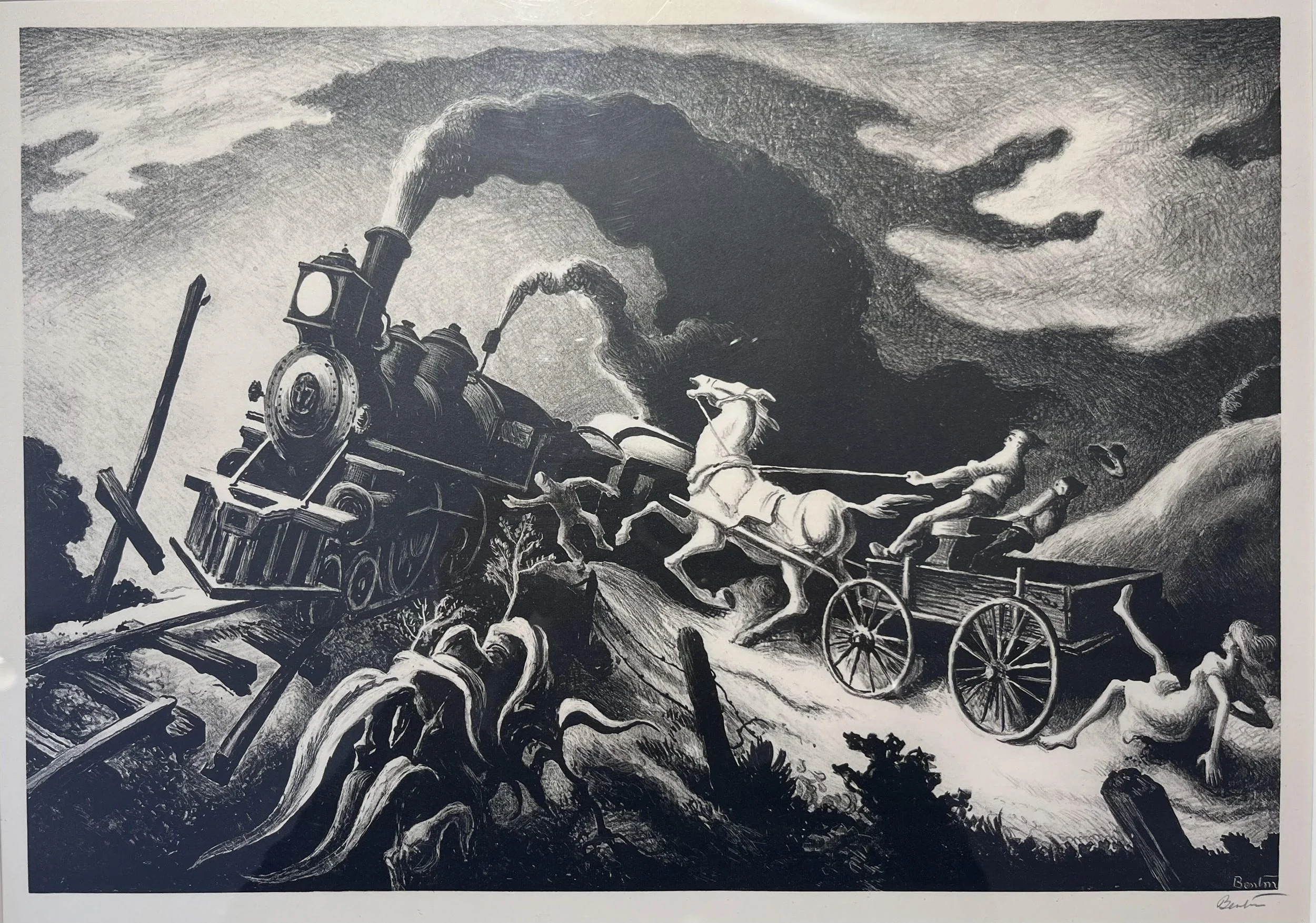
Wreck of the Ol' 97, 1944 10 ¼ x 15 inches
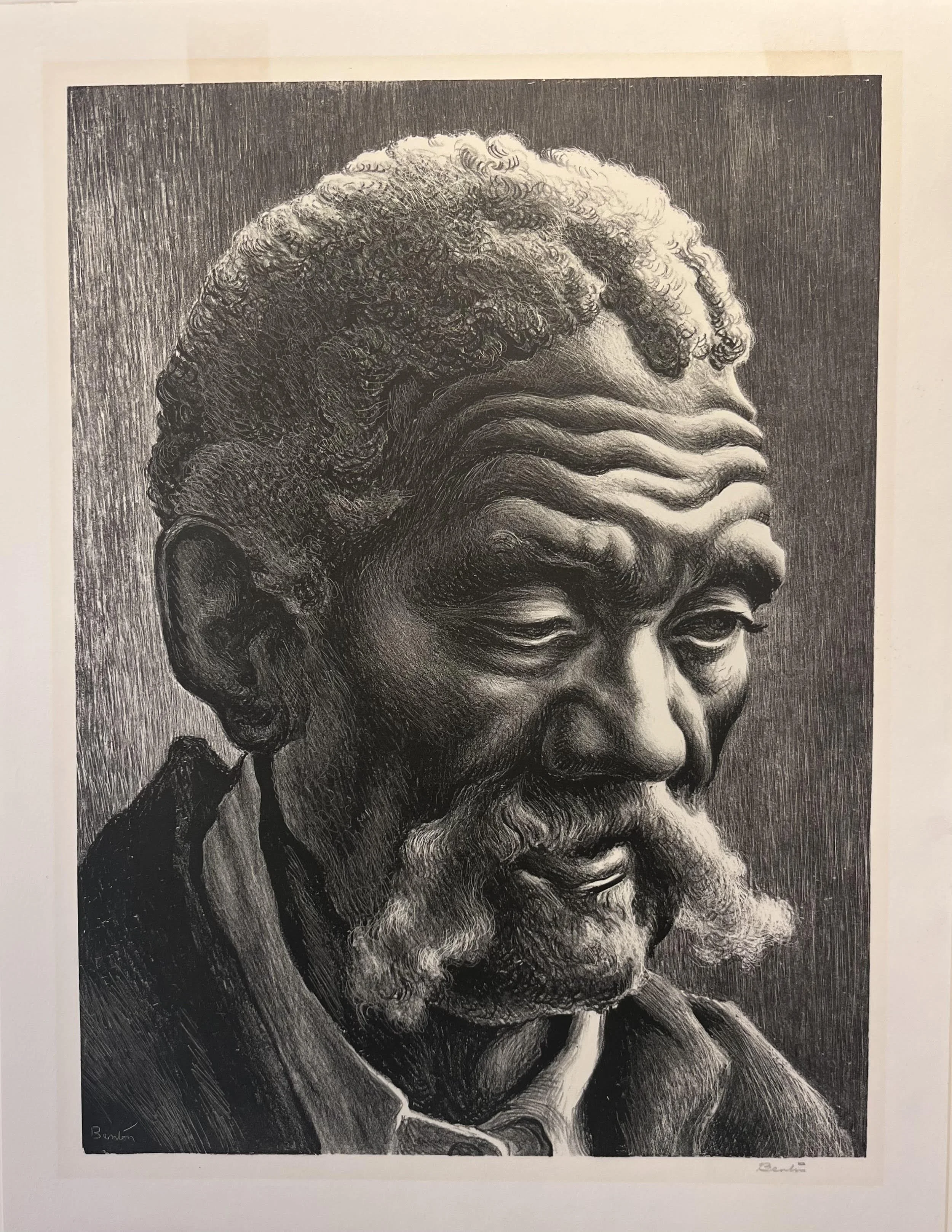
Aaron, 1941 12 ¾ x 9 ½ inches
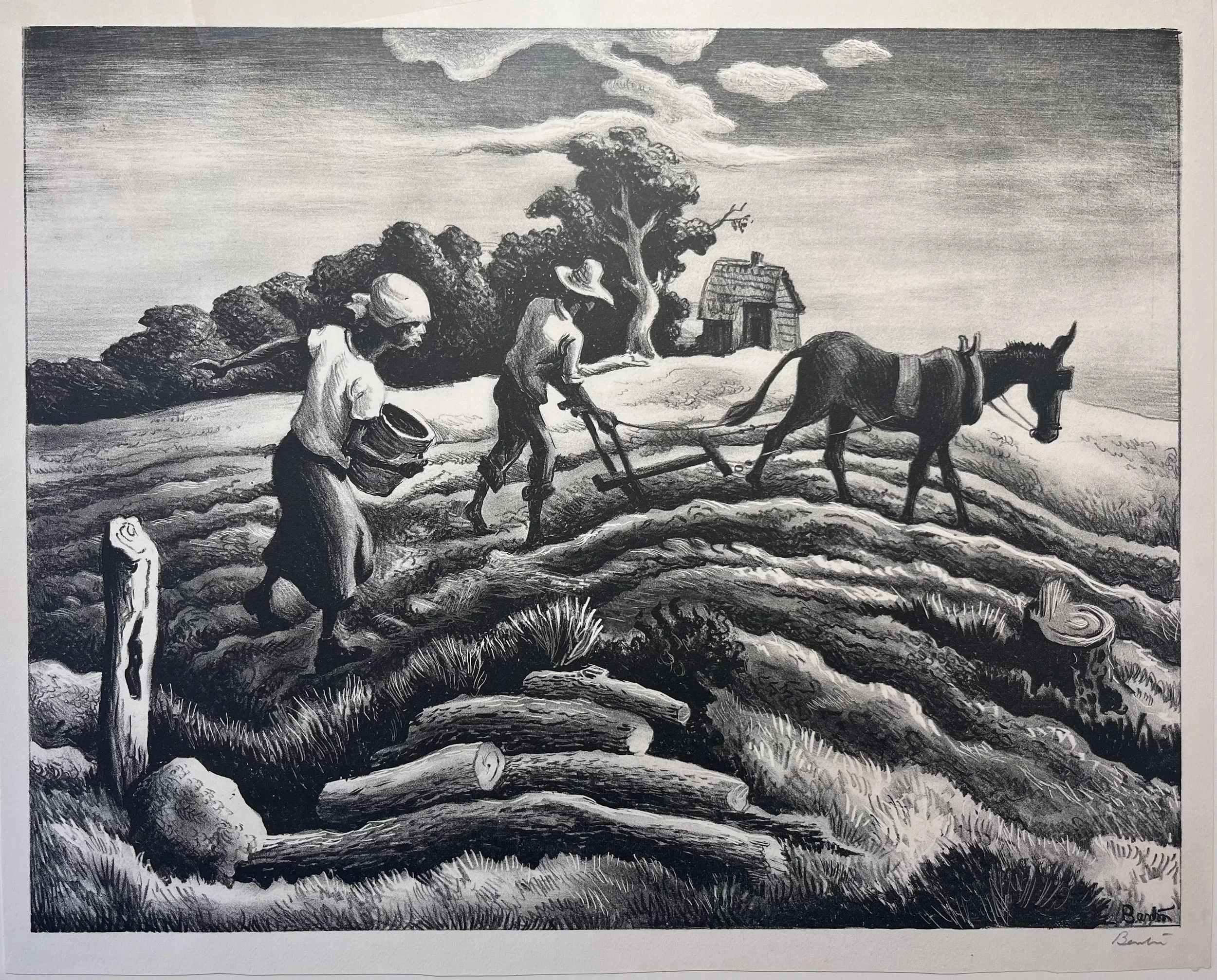
Spring Planting, 1940 9 ¾ x 10 ⅝ inches
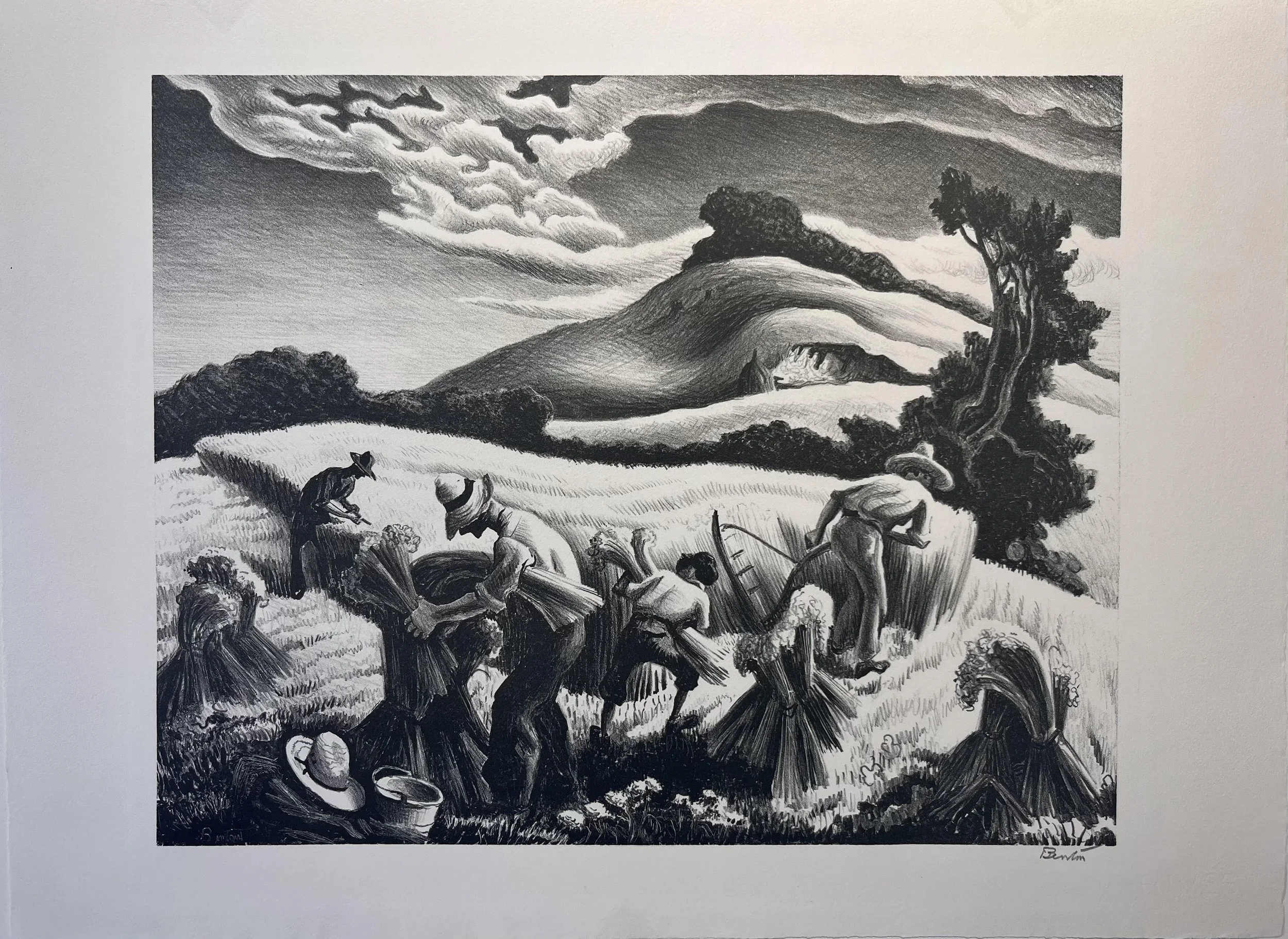
Cardling Wheat, 1939 9 ½ x 12 ¼ inches
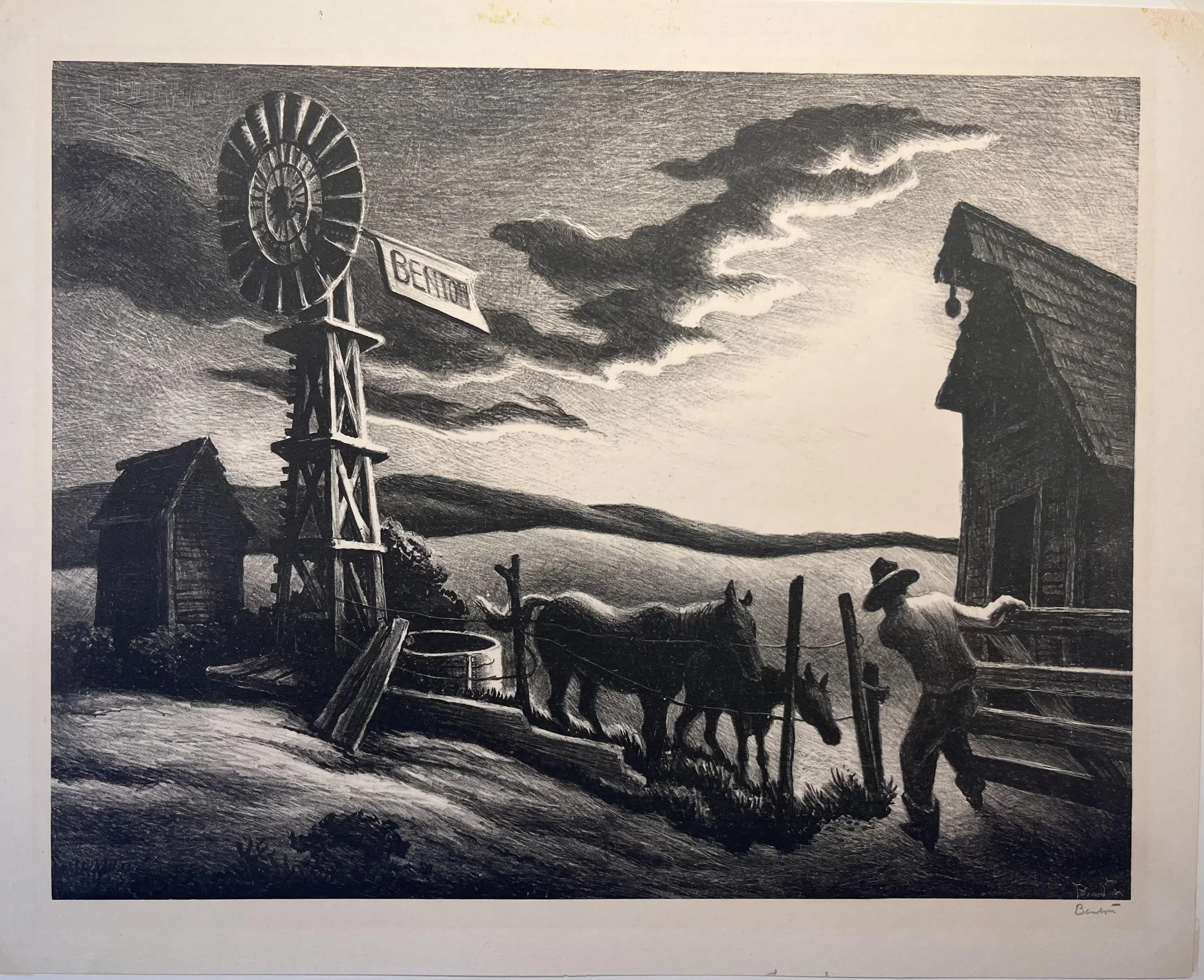
Nebraska Evening, 1941 10 x 13 inches
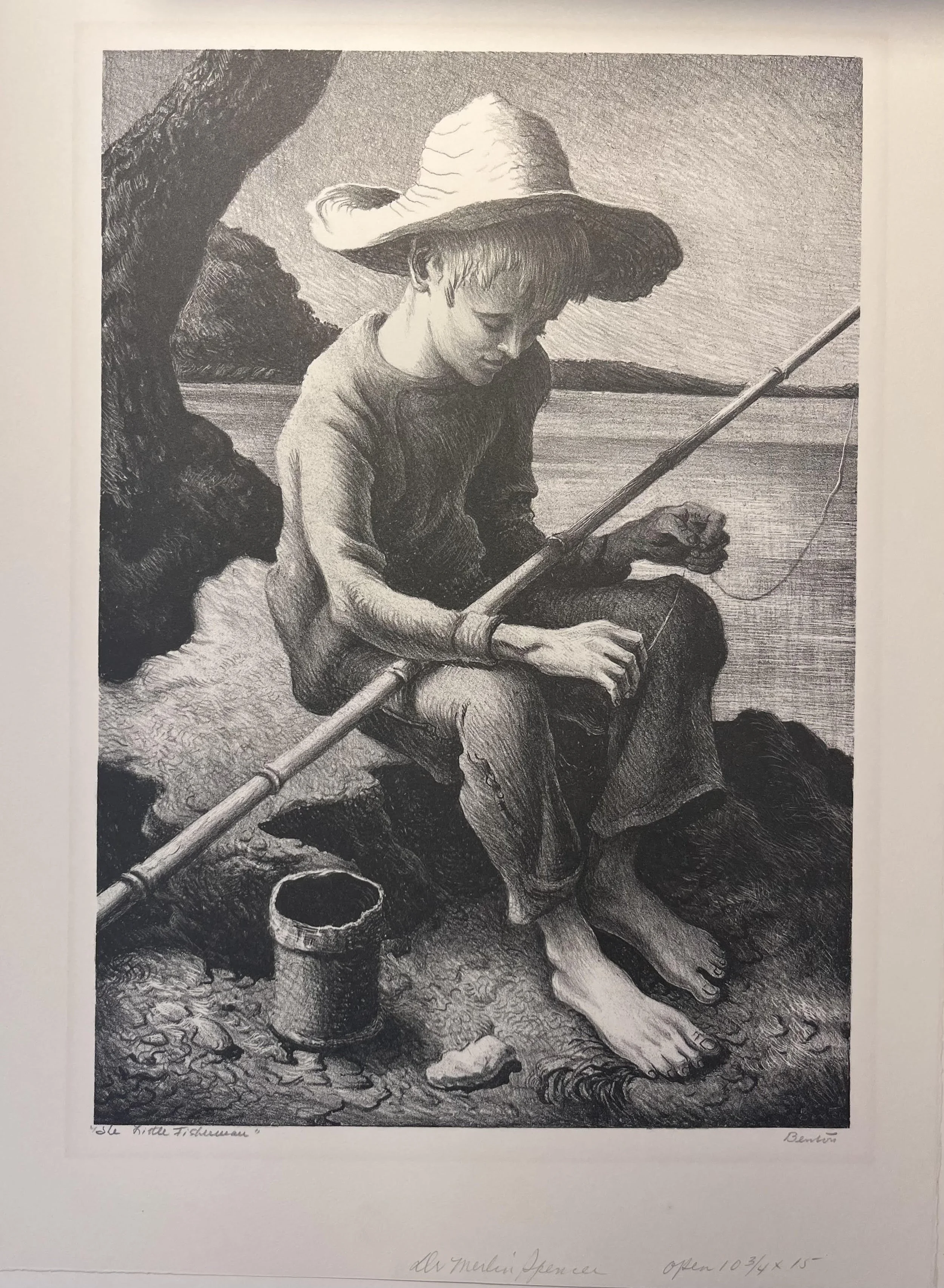
Little Fisherman, 1969 14 x 9 ¾ inches
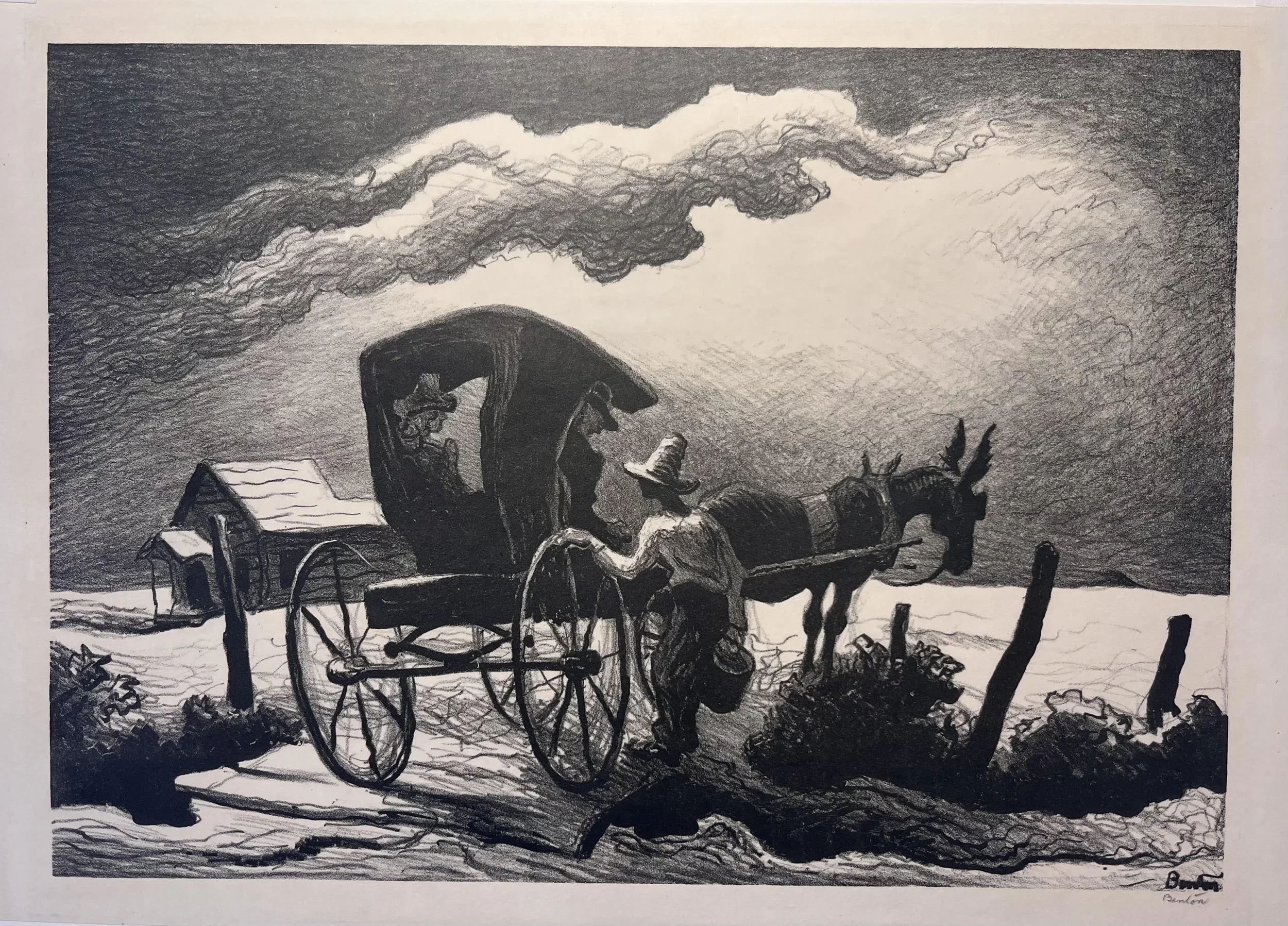
Gateside Conversation, 1946 10 ¼ x 14 ⅜ inches
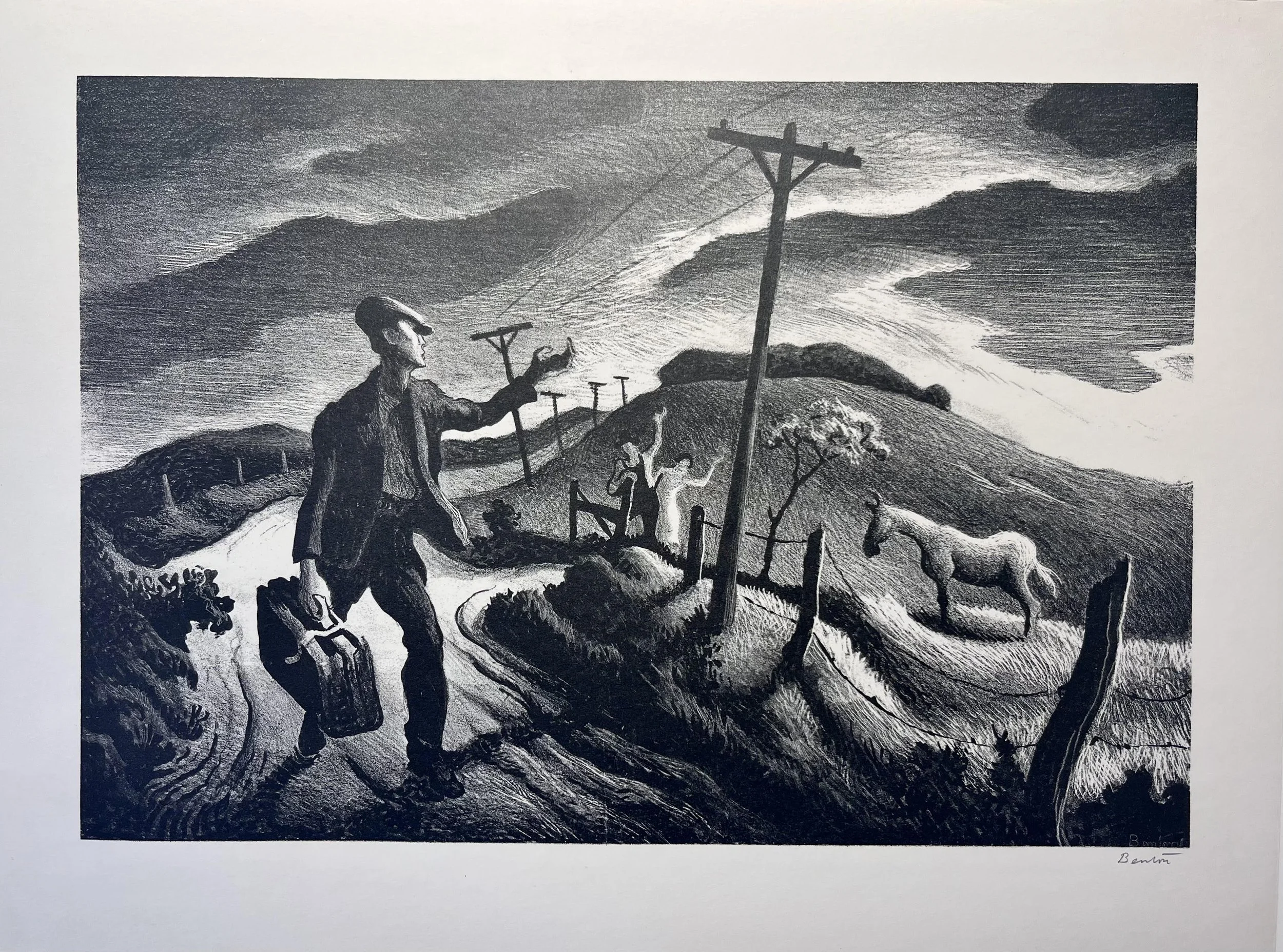
The Boy, 1948 9 ½ x 13 ¾ inches
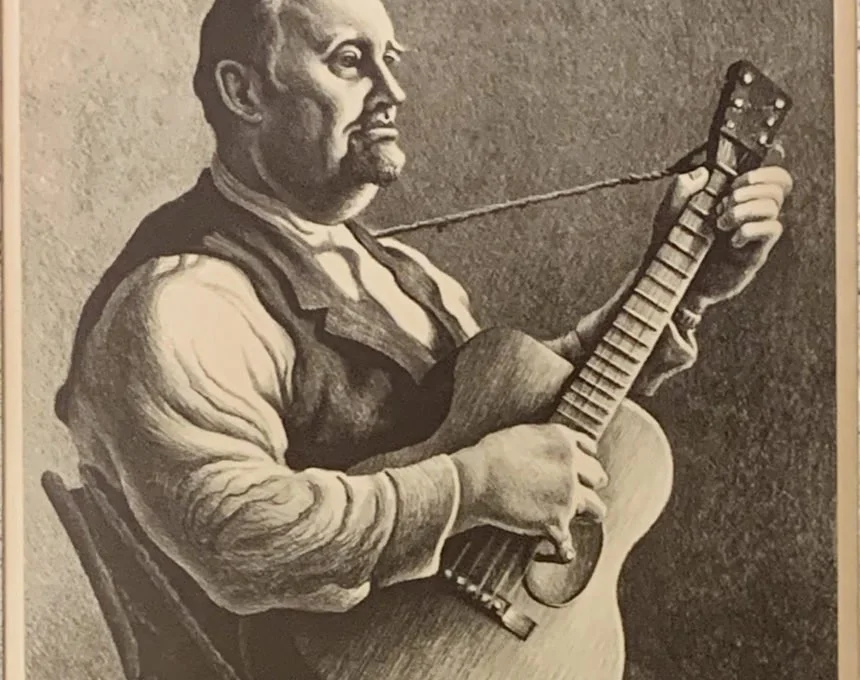
The Hymn Singer; Burl Ives, 1950 Lithograph (signed) 16 x 12 ¼ inches
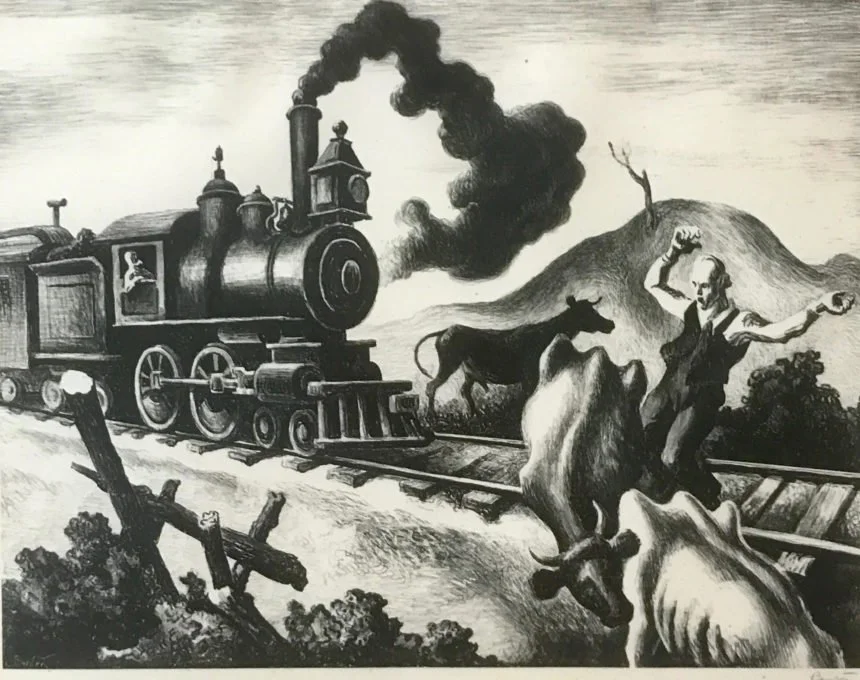
Slow Train Through Arkansa, 1941 Lithograph (signed) 10 x 12 ½ inches
b. 1889, Neosho, MO
d. 1975, Kansas City, MO
Thomas Hart Benton was an important realist painter of the Regionalist school, as well as a muralist, printmaker, teacher, and writer.
A member of the famous Missouri political family, Benton grew up near the Ozarks. At seventeen, he left home to study at the School of the Art Institute of Chicago from 1906 to 1907. He later traveled to Paris and studied at the Académie Julian from 1908 to 1911. Beginning in 1912, he worked as a professional painter in New York City, though he struggled to sell his work, as he rejected the European modernist style popular at the time.
During World War I, Benton worked as an architectural draftsman for the Navy, an experience that pushed him toward realism. At his first postwar exhibition, several of his new paintings sold.
From 1926 to 1935, Benton taught at the Art Students League of New York. During this period, he traveled extensively throughout the United States, sketching in industrial centers, the South, the Far West, Texas, and New Mexico.
After twenty years in New York City, Benton returned to Missouri, leaving behind what he described as “an intellectually diseased lot of painters,” to become Director of Painting at the Kansas City Art Institute.
Benton gained national recognition for his murals depicting contemporary American life, which critics sometimes called “tabloid art,” including his work for The New School in New York City. In his 1935–36 mural cycle for the Missouri State Capitol, he rejected traditional heroic imagery, instead including figures and subjects such as Boss Pendergast, Jesse James, and “Frankie and Johnny.”
Alongside Grant Wood and John Steuart Curry, Benton became known for his ability to portray the essence of an American region.
Source: Peggy and Harold Samuels. Encyclopedia of Artists of the American West. New York: Castle Publishing, 1985.