
Oscar E. Berninghaus
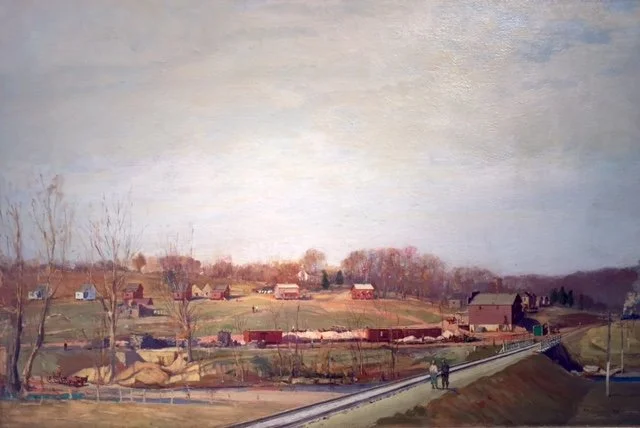
Tiff Mining Village, 1919 Oil on panel 20 x 30 inches
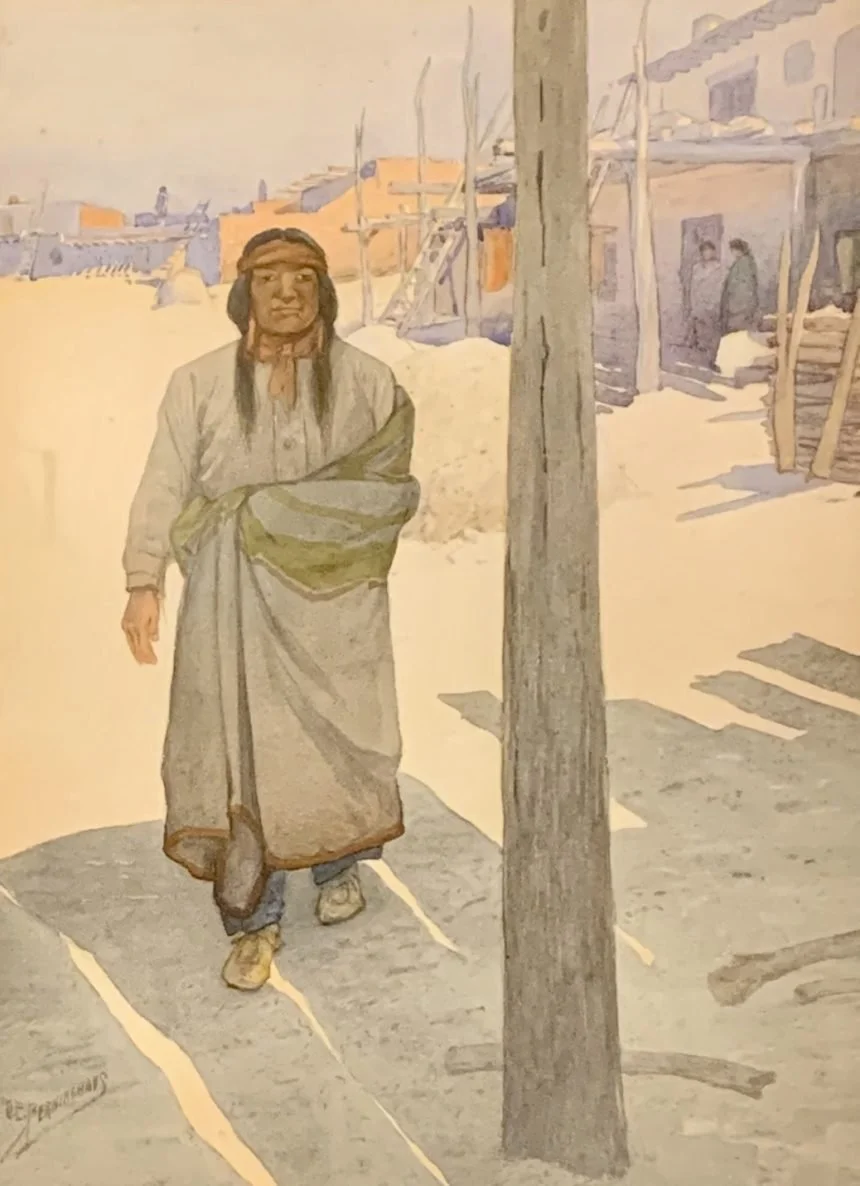
Morning Shadows – Taos Pueblo Watercolor on paper 16 x 11 ¾ inches
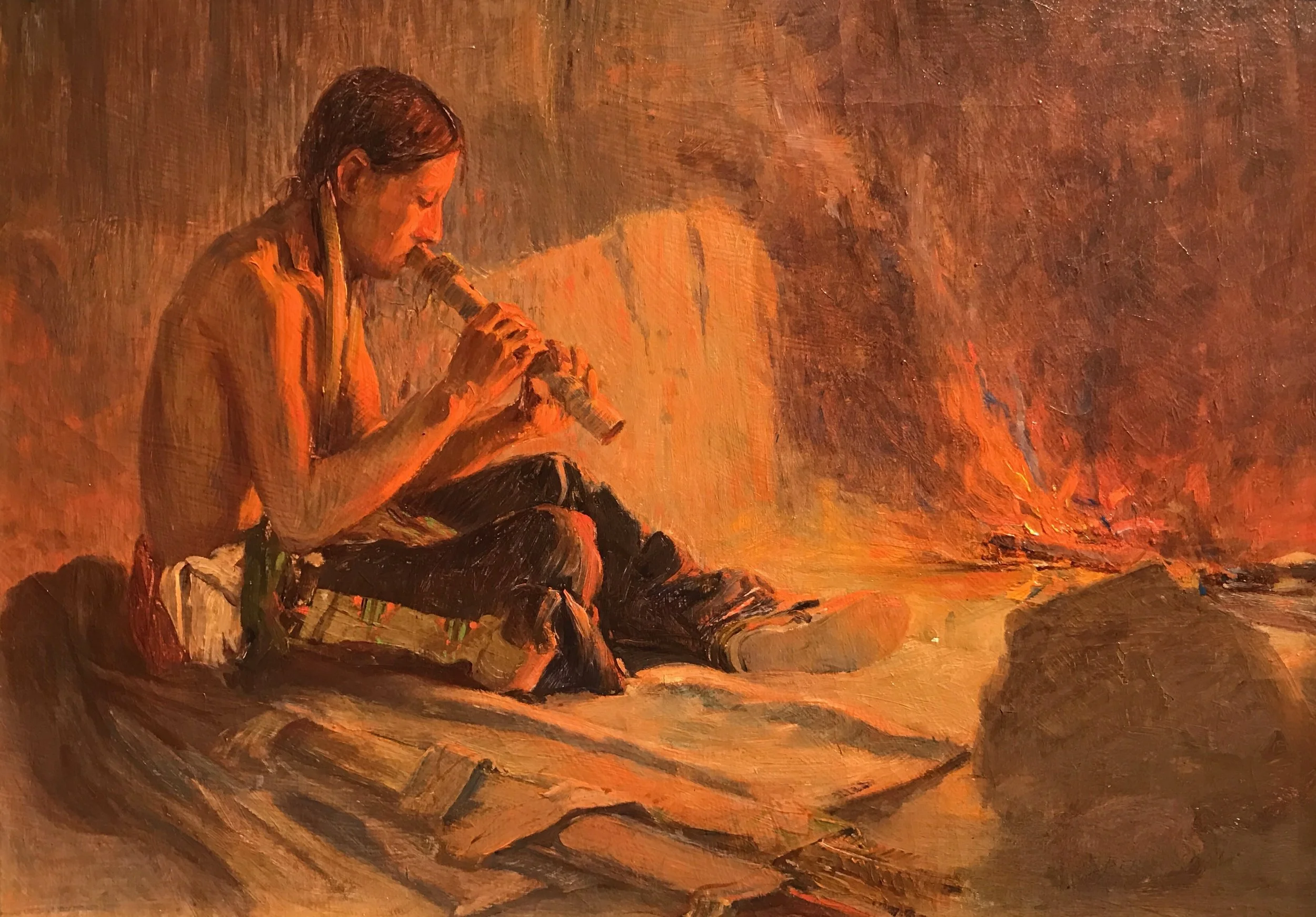
The Flute Player Oil on canvas 12 x 17 inches (20 x 25 inches framed)
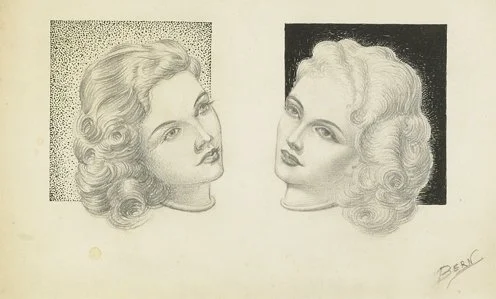
Figural Study Mixed media 6 x 10 inches
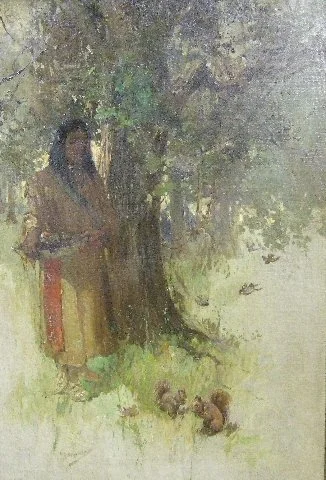
Maiden (Sold)
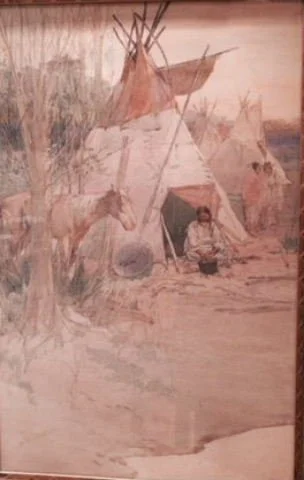
Indian Encampment (Sold)
b. 1874, St. Louis, MO
d. 1952, Taos, NM
Oscar E. Berninghaus was a founding member of the Taos Society of Artists in 1898. He excelled at drawing animals and figures in contemporary garb set in Southwestern landscapes. Many of his early paintings were Impressionistic, “suffused with color and light” (Gerdts).
Berninghaus was born in St. Louis, Missouri, and developed an interest in art through his family’s lithography business. He attended night classes at the St. Louis School of Fine Arts. In 1898, he traveled to New Mexico and Arizona on an illustration assignment for McClure's magazine, the first of many trips to the Southwest. Having heard of the beauty of Taos, he visited the town and met Bert Geer Phillips, who was already living there and invited him to return.
This visit began a tradition of spending winters in St. Louis and summers in Taos. Berninghaus remained active in both communities and, for many years, designed the costumes and floats for the famous Veiled Prophet parade in St. Louis. He also produced a series of western scenes commissioned by the Anheuser-Busch Brewing Association. These scenes were intended to promote themes of rugged masculinity and strengthen Anheuser-Busch’s image as a good American company amid growing criticism from suffragists and temperance advocates. In this capacity, and without visiting the area, Berninghaus painted Old Faithful, Yellowstone in 1914, which was used as a calendar illustration in the series.
He later worked as a sketch artist for the Denver and Rio Grande Railroad, depicting landscapes of Colorado and New Mexico. In 1919, he purchased an adobe house overlooking Taos, and in 1925 settled there permanently. He also completed commissions in surrounding states, including a five-lunette mural for a post office in Phoenix in 1931 depicting the opening of the American West.
His style was one of short, quick brush strokes, which gave his work a unique texture. Early in his career, he painted on site, but later from memory, which was described as extremely accurate. Berninghaus believed the Taos Art Colony represented a distinctly American art, with subject matter unique to the United States. He depicted Native Americans in a realistic, unromanticized manner, portraying everyday life in twentieth-century New Mexico.
Sources:
Gerdts, William H. American Impressionism. New York: Abbeville Press, 1984.
Hassrick, Peter H. Drawn to Yellowstone: Artists in America’s First National Park. Seattle: University of Washington Press, 2002.
Samuels, Peggy, and Harold Samuels. Encyclopedia of Artists of the American West. New York: Castle Publishing, 1985.
Zellman, Michael David. 300 Years of American Art. Secaucus, NJ: Wellfleet Press, 1987.