
Oscar Thalinger
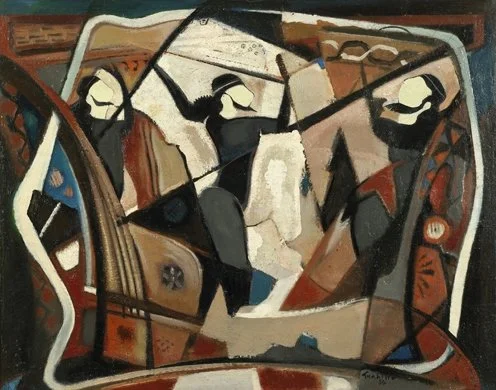
TITLE MEDIUM H x W inches
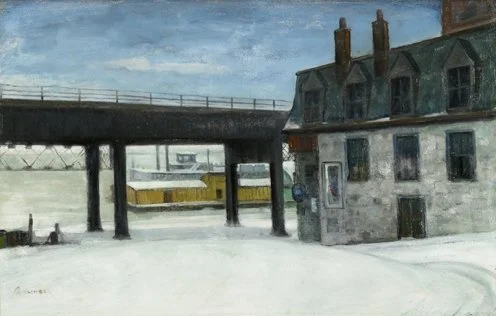
TITLE MEDIUM H x W inches
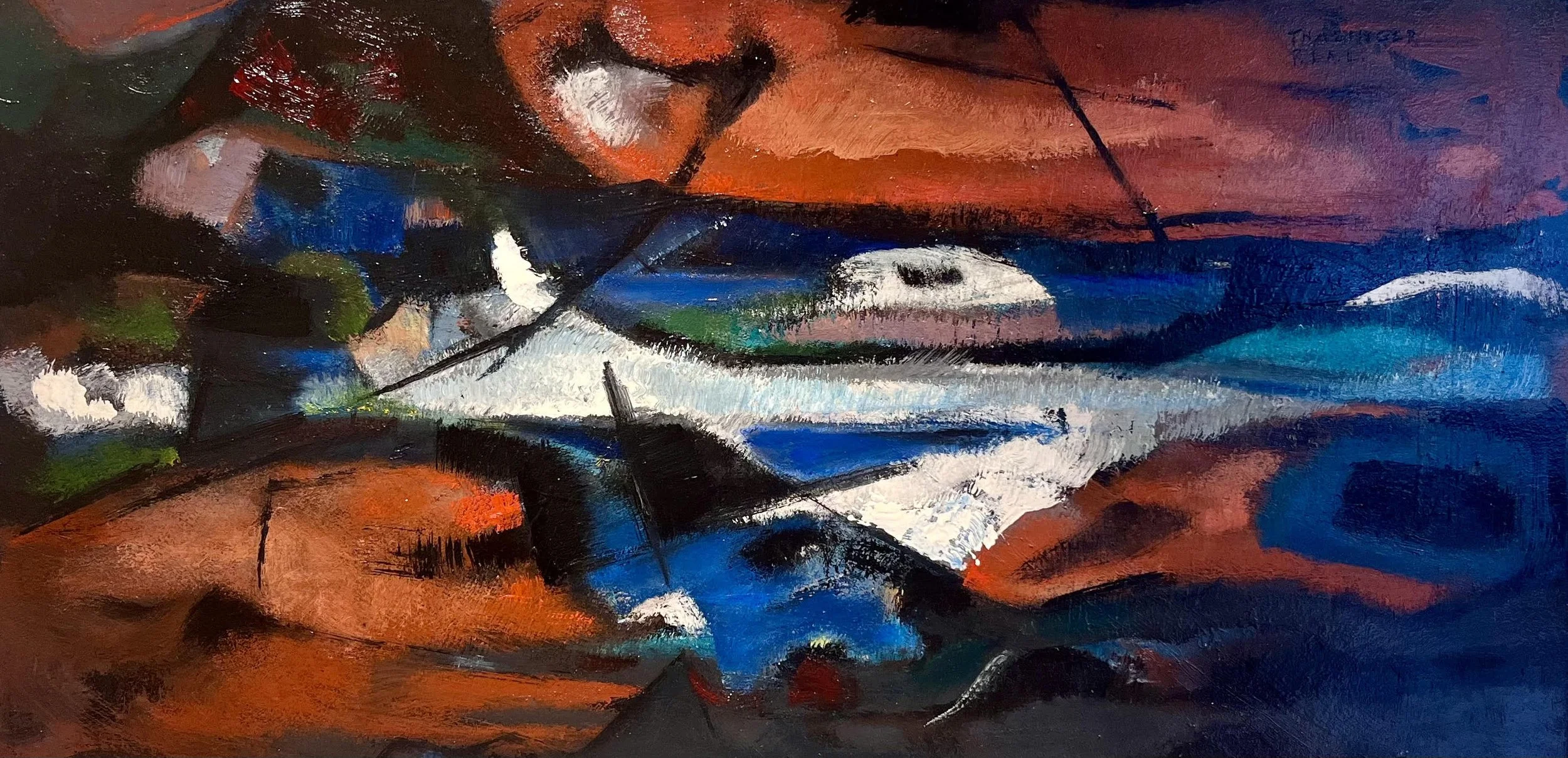
TITLE MEDIUM H x W inches
b. 1883, St. Louis, MO
d. 1965, St. Louis, MO
Oscar Thalinger’s work evolved from realistic landscape paintings to non-objective abstract modernism. At the age of fifteen, he enrolled in the St. Louis School of Fine Arts, later the Fine Arts School of Washington University, where he studied painting and drawing during the day and sculpture at night.
During the late 1920s and early 1930s, Thalinger became known for his depictions of aging St. Louis landmarks and neighborhoods that had lost their former glory. Like many local artists of the period, he sought both inspiration and escape from the city’s problems. During these years, he painted Regionalist subjects and participated in the Ste. Genevieve Art Colony, a group of artists drawn to the historic town of Ste. Genevieve, Missouri.
Although his subject matter expanded over time, Thalinger became increasingly interested in distorted perspective and the gradual abandonment of realism. His studies in Paris and Munich during the early twentieth century exposed him to European modernist movements, including Cubism and abstract expressionism.
Following World War II, Thalinger moved away from the social realism that had characterized much of his earlier work and embraced American modernism. In 1946, the City Art Museum of St. Louis acquired one of his paintings for its permanent collection.
A major retrospective exhibition of Thalinger’s work was presented in St. Louis in 1955, featuring paintings that ranged from representational works to abstract and non-objective compositions.
Throughout his career, Thalinger was active in a number of artistic organizations, including the St. Louis Artists’ Guild, the St. Louis Art League, the 2 x 4 Society, and Artists Equity, where he served as president.