
Carl Krafft
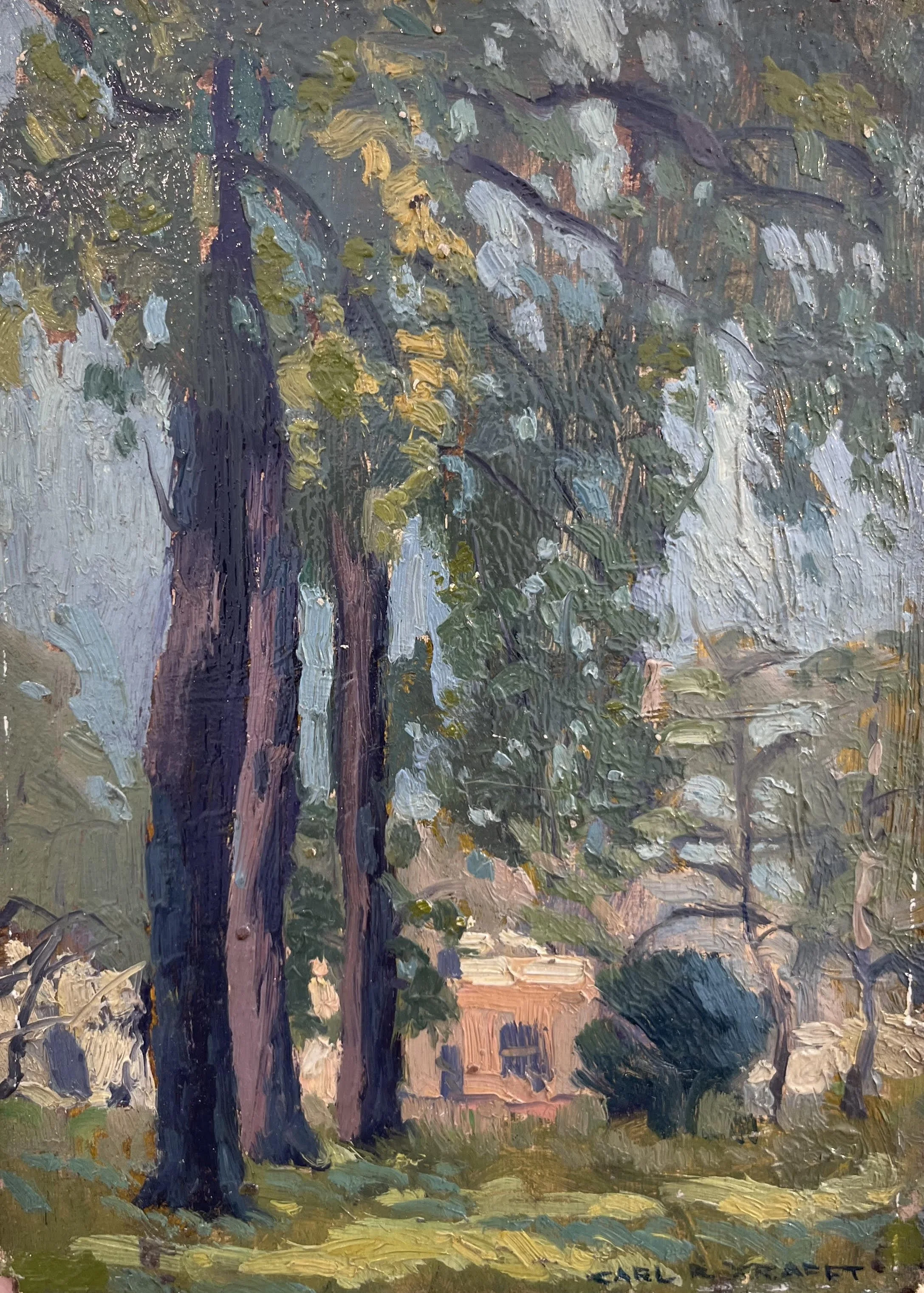
Ozark Summer Oil on academy board 8 x 6 inches
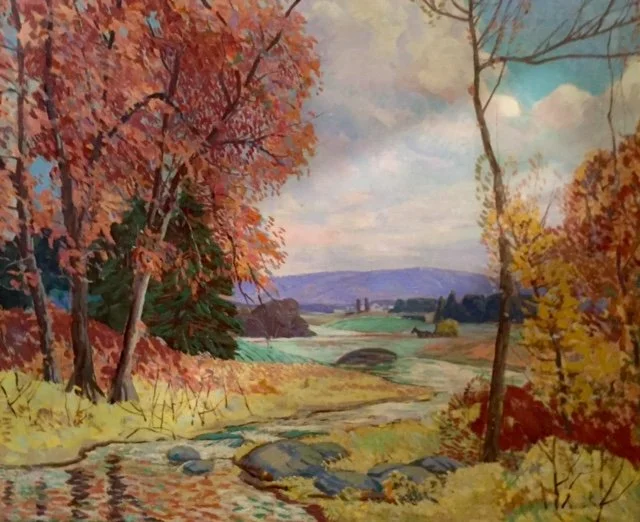
Autumn Landscape Oil on canvas 25 x 29 inches
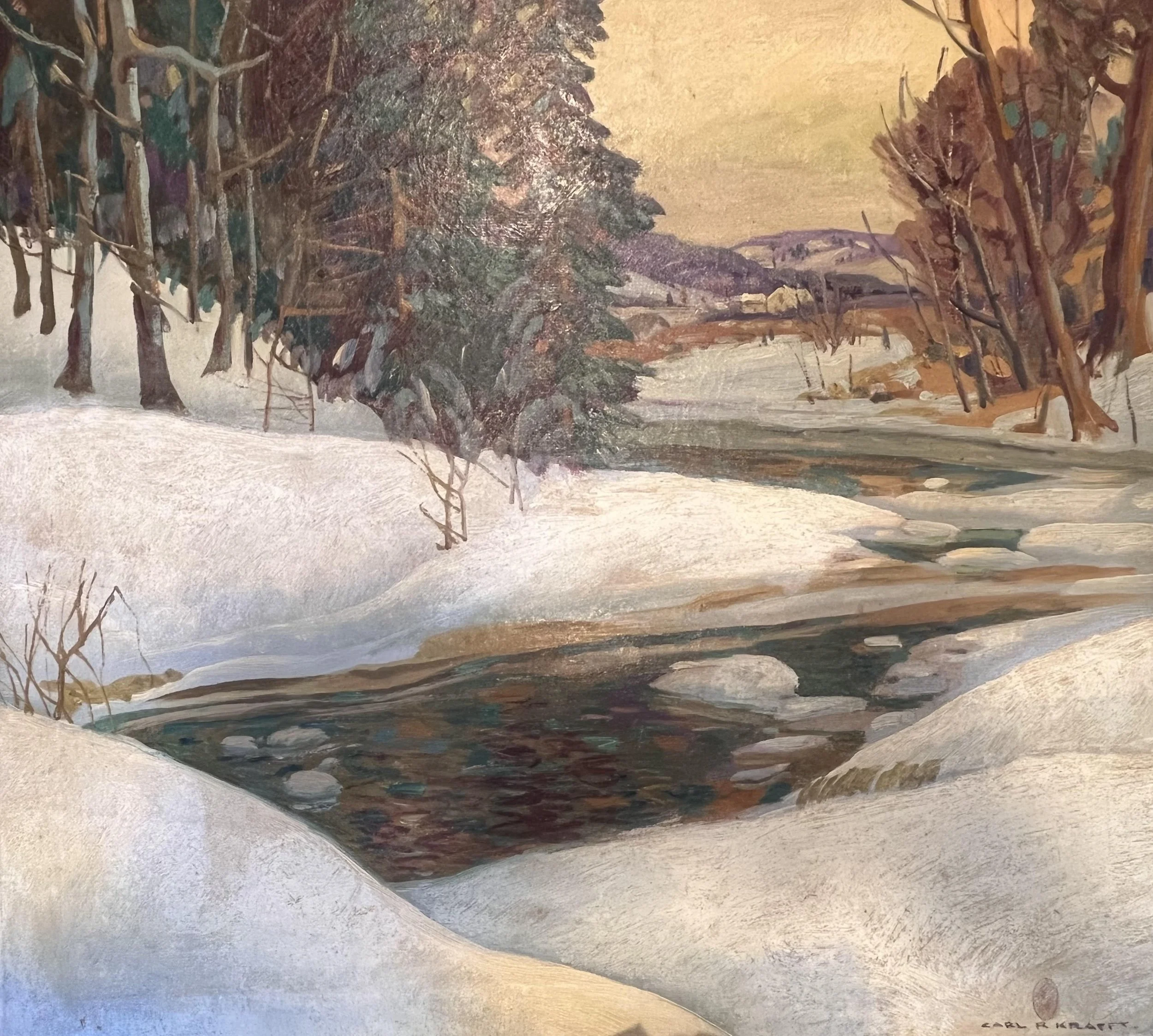
Ozark Winter Oil on canvas 24 x 27 inches
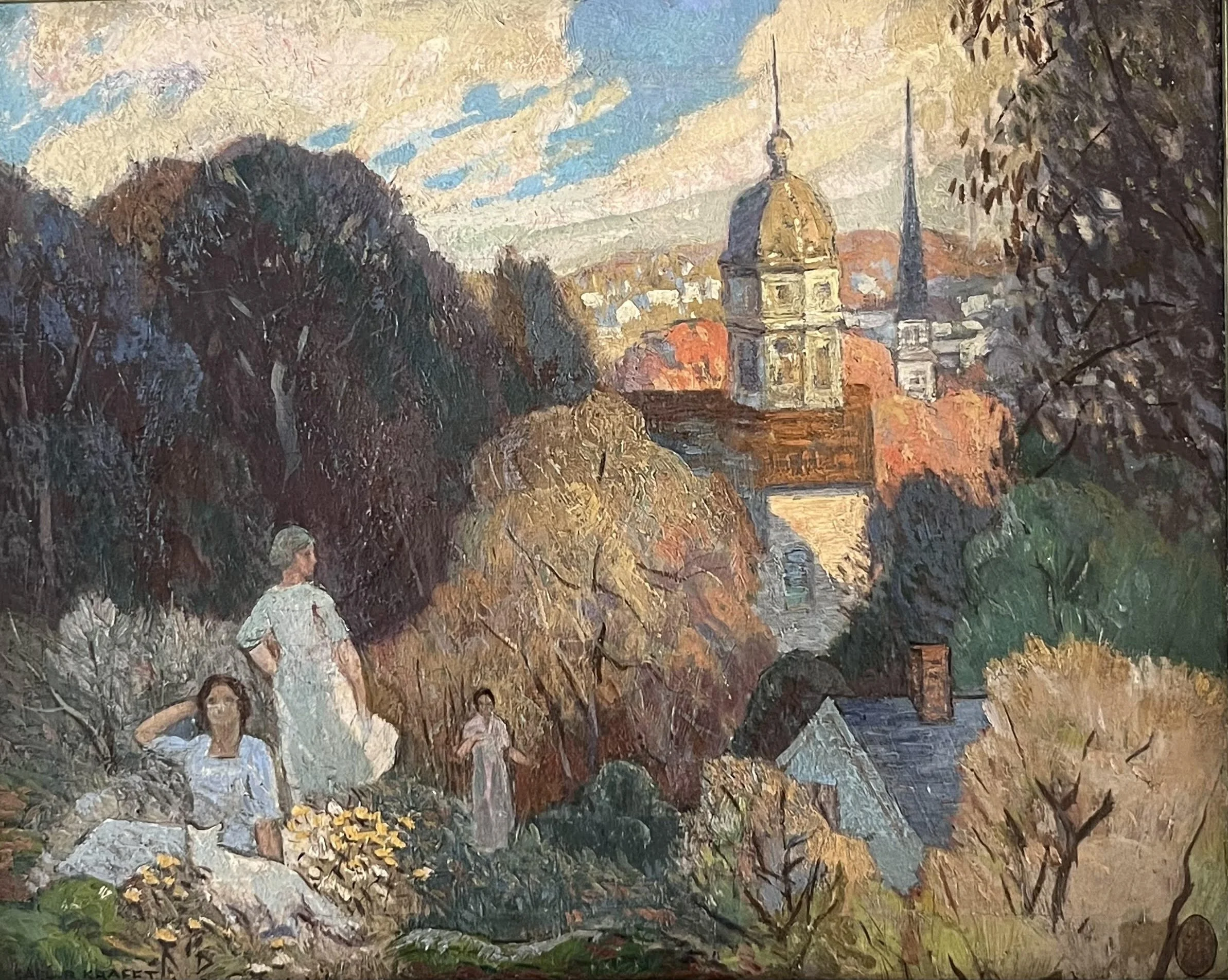
From the Heights Oil on canvas 16 x 20 inches
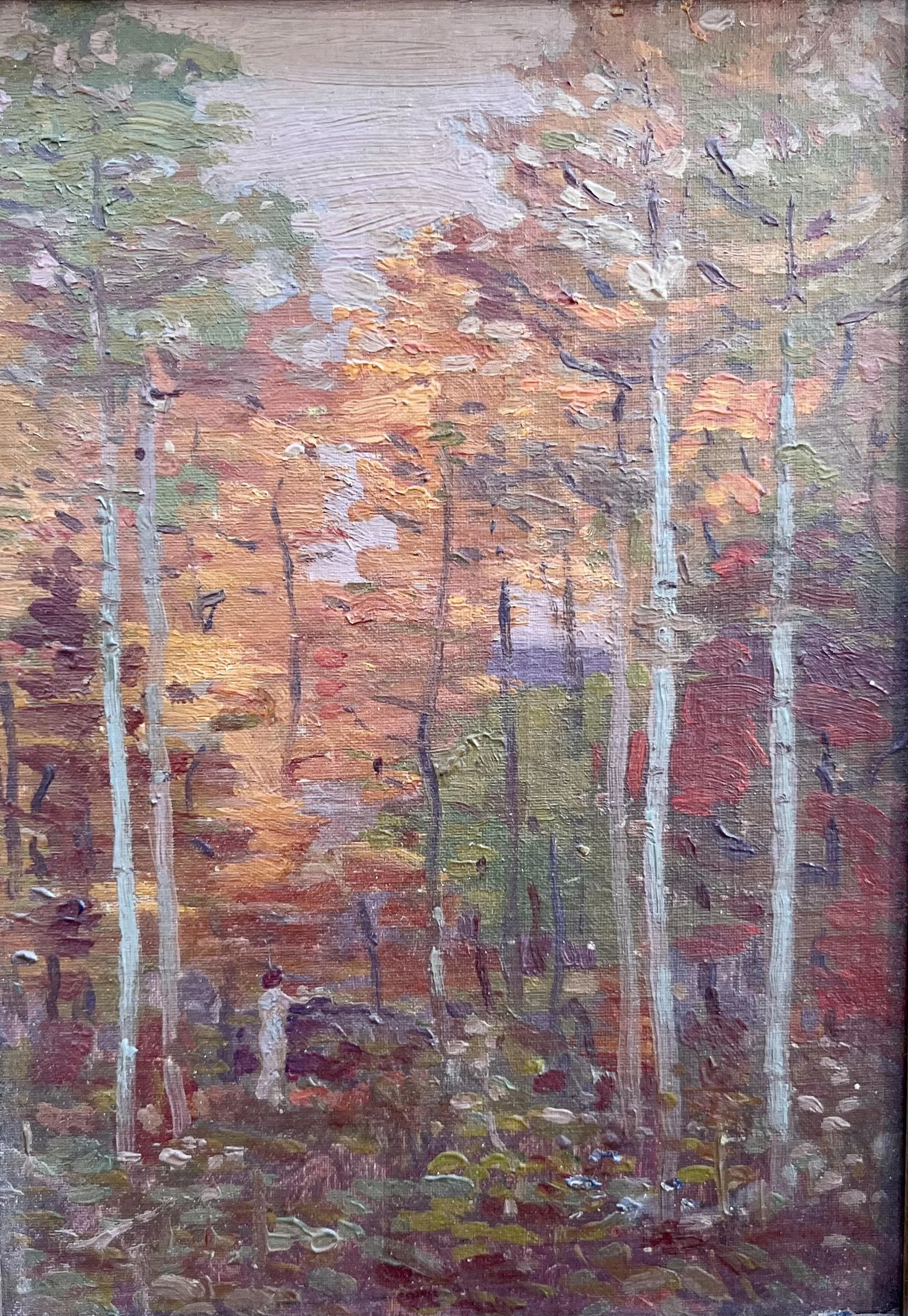
The Woods Oil on academy board 8 x 6 inches
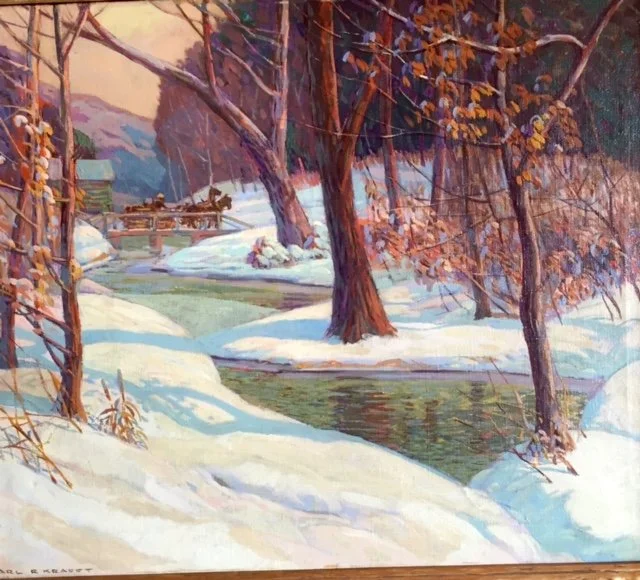
Traveling Across a Snowy Bridge Oil on canvas 25 x 29 inches
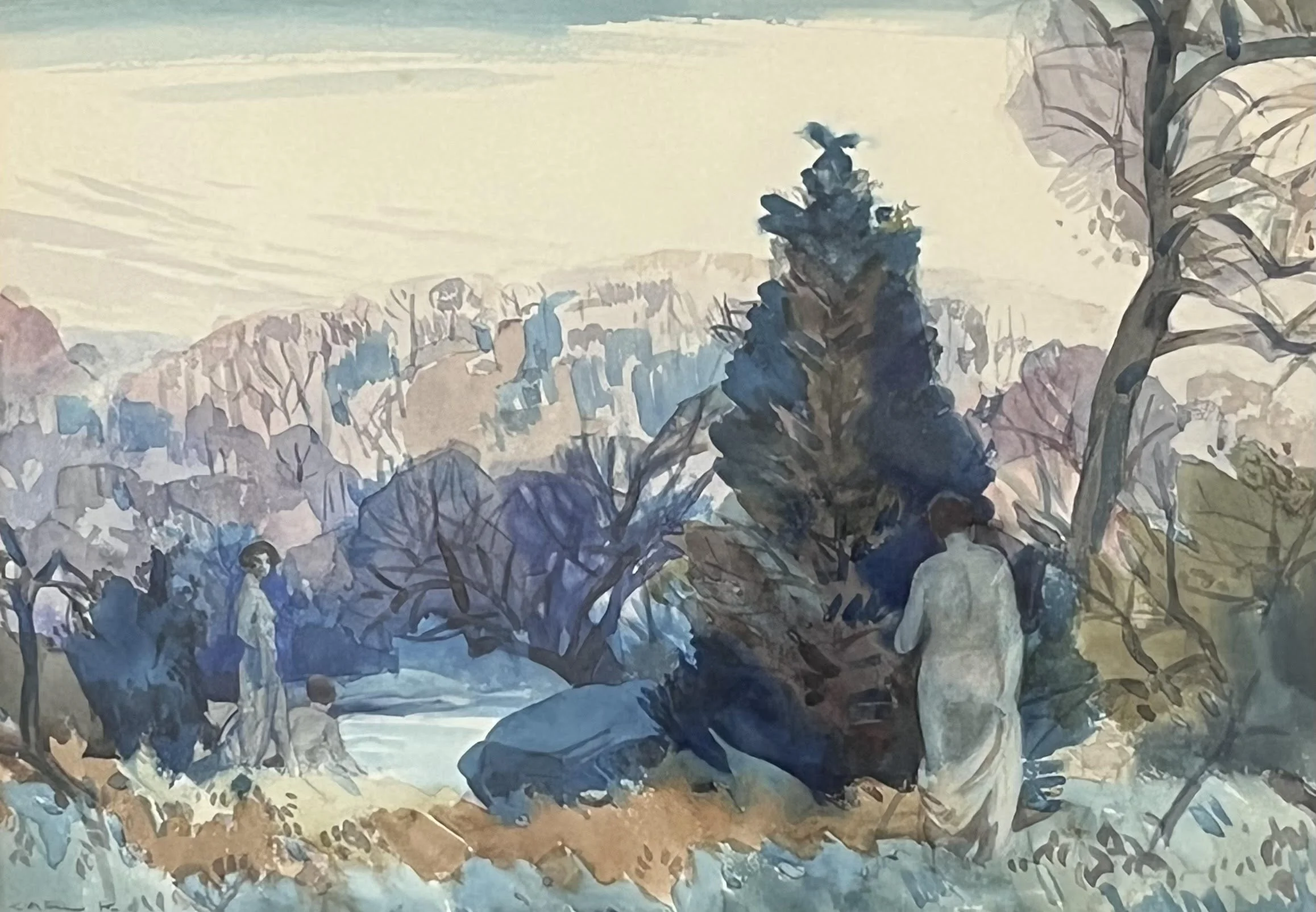
The Evening, 1927 Watercolor 10 x 14 inches
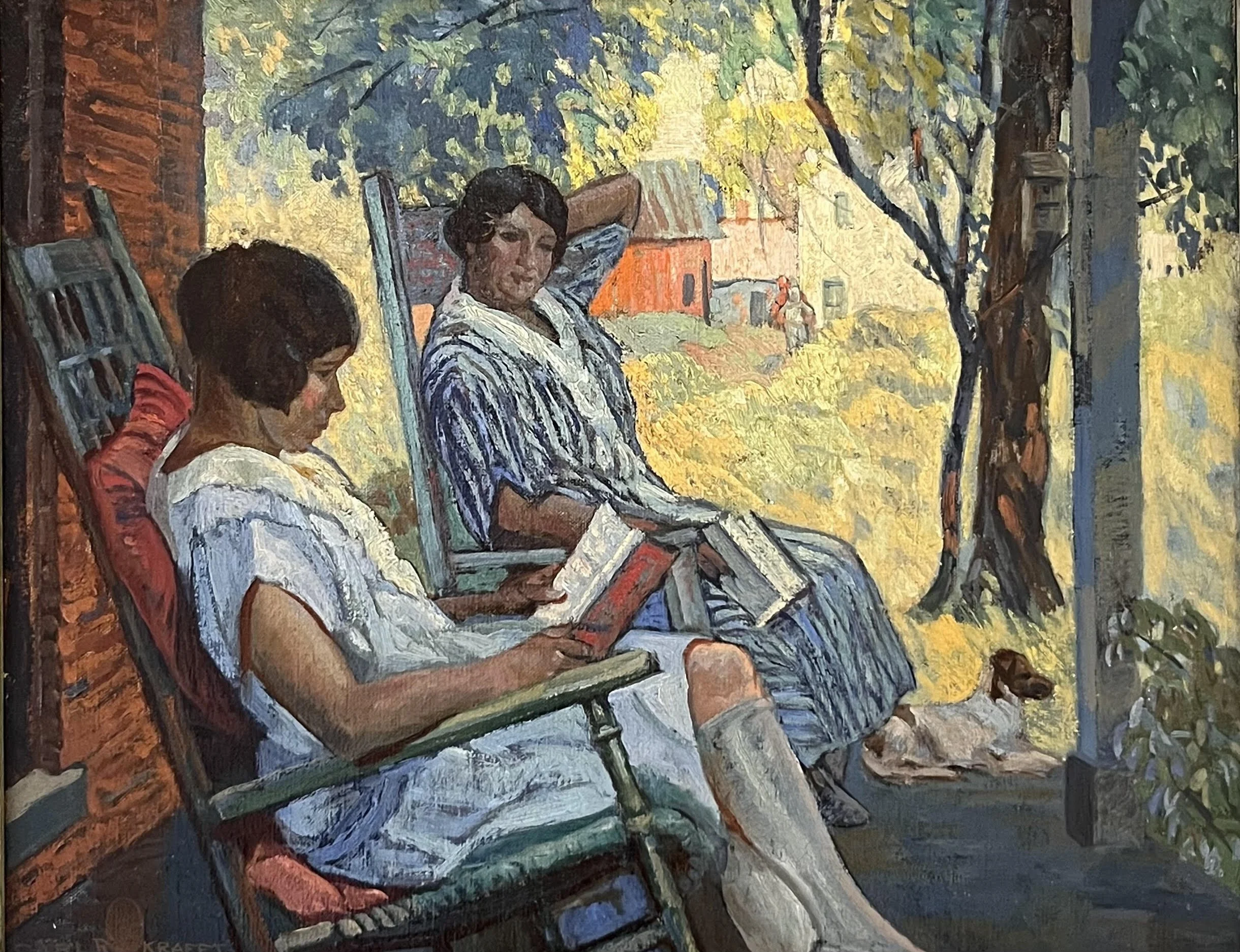
The Porch Oil on canvas 16 x 20 inches
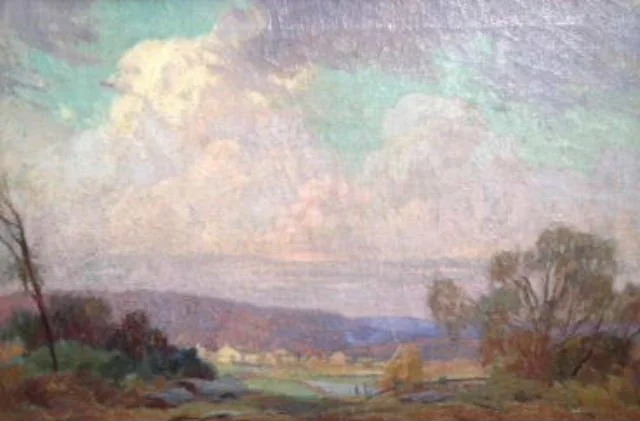
Aurora Over Small Town Oil on canvas 20 x 30 inches
b. 1884, Reading, Ohio
d. 1938, Oak Park, IL
Born in Reading, Ohio, Carl Krafft became a prolific regionalist painter known for his Impressionist landscapes of the Midwest, as well as select seascapes and genre scenes depicting men at work and riverboat landings.
Krafft maintained a studio in Oak Park, Illinois, and frequently traveled throughout the surrounding countryside, Brown County, Indiana, and the Ozarks of south-central Missouri. In the Ozarks, he and fellow artist Rudolph Ingerle helped establish the influential Society of Ozark Painters. Artists were drawn to the area for its dramatic terrain and “the delicate color of its hazy atmosphere.” Amid the upheaval of World War I, the Ozarks also became a refuge for artists seeking subjects that contrasted with the devastation of war. Krafft painted in the region for more than two decades and referred to it as his “cathedral of nature” (Kennedy, 128).
Krafft first gained attention for his painting The Charms of the Ozarks, which was included in the 1916 annual exhibition at the Art Institute of Chicago and awarded a $500 prize. The work was subsequently purchased by the Municipal Art League, consistent with their mission of civic beautification. The success of the painting proved pivotal in Krafft’s decision to pursue painting full time.
Although the Ozarks remained central to his work, Krafft also traveled to and painted the Hudson River Valley of New York in 1925. During the Great Depression, the popularity of his paintings led to widespread imitation and forgery. In response, Krafft began placing his thumbprint on many of his works as a means of authentication. His paintings were often compared to those of Daniel Garber, though Krafft later distanced himself from strict regional associations, explaining that he sought “a more universal than regional following” (Illinois Historical Project). This broader appeal was reflected in the national reach of his exhibitions and sales, including presentations in New York and other major art centers between 1912 and 1938.
Krafft moved to Chicago in the early 1900s, where he initially worked as a commercial designer. He began formal art training in 1903 and 1904 through evening classes at the School of the Art Institute of Chicago. From 1910 to 1913, he continued his studies there under Harry Walcott and Edward Vysekal, and later returned from 1924 to 1925 to study with Leon Kroll. He also studied at the Chicago Fine Arts Academy.
Among Krafft’s closest friends and painting companions were Kroll and Eugene Savage, whom he later credited with providing “more sound guidance and inspiration” than any other influence in his artistic development (Illinois Historical Project).
Throughout his career, Krafft exhibited widely at institutions and organizations including the Palette and Chisel Club, the Vose Galleries, the National Academy of Design, the Corcoran Gallery of Art, and the Pennsylvania Academy of the Fine Arts.
In addition to his painting career, Krafft played an active role in regional arts organizations. He was a founding member and first president of the Society of Ozark Painters in 1915, a founder of the Municipal Art League in Springfield, Missouri, and a founder of the Oak Park Art League, where he served as president from 1921 to 1922.
Sources:
Illinois Historical Project, www.illinoisart.org/index.html
Elizabeth Kennedy, “Chicago Modern, 1893-1945”
Peter Hastings Falk, Editor, Who Was Who in American Art
Michael David Zellman, 300 Years of American Art